
Drinking Beet Juice Versus Eating Beetroot
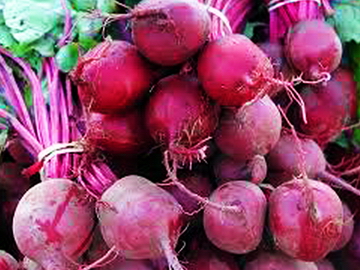
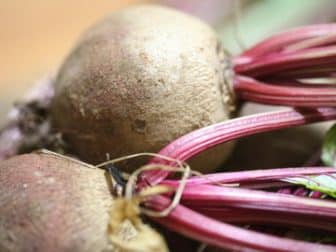 Deep red beetroot juice is loaded with nutrition and has a wide range of health benefits for people who drink it regularly.
While the fiber is removed with beet juice, other nutrients, like its antioxidant polyphenols and nitric oxide-boosting nitrates, are highly concentrated and bioavailable.
What’s the Difference Between Drinking Beet Juice and Eating Beetroot?
Eating whole beets provides fiber for better digestive health and fills you up for less hunger and potential weight loss benefits. Juicing removes the fiber from beets but concentrates all the nitrates, betaine, betalains, and other beneficial compounds in this red superfood into an easily absorbed form.
You absorb the nutrients from juice much faster, which is why athletes and bodybuilders prefer it before workouts. Juiced beetroot also delivers a more potent dose of the active compounds that lower blood pressure, improve circulation and fight inflammation.
There’s much more on the nutritional differences between beet juice, raw beetroot and cooked beets here in this guide to Beetroot vitamins, minerals and nutrition levels.
How to Make Beetroot Juice at Home
If you’d like to start making fresh beet juice for yourself, you’ll need the right equipment. A masticating juicer works best since these models extract more juice from the fruits and vegetables you feed into them. They also produce less heat and foam than cheap centrifugal models.
Ideally look for one with a wide chute. It saves a lot of time when you can push whole beets straight in and don’t have to chop them up. Just give them a good scrub and feed them down the chute.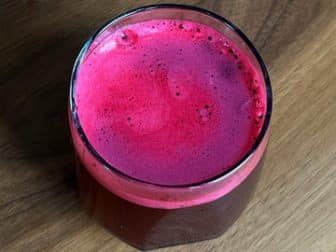
There’s no need to peel them and if you manage to find beetroots with their greens still on then wash the leaves well and juice them too. Beet greens are very healthy and loaded with vitamin K and A, as well as antioxidants like beta-carotene, lutein and vitexin.
Adding an apple, pineapple, lime juice or piece of ginger improves the taste if you find beetroot’s earthy flavor a bit strong. Other healthy superfood combinations include carrot, leafy greens and particularly pomegranate and beet juice.
How Long Does Fresh Beet Juice Last?
Unfortunately freshly made beetroot juice starts losing nutrients almost immediately after juicing and continues to degrade nutritionally, even when kept in the refrigerator.
While it’s still safe to drink for a day or two when stored in an airtight container in the fridge, you’ll definitely get the most benefits from drinking it straight away, or at least within an hour of juicing.
If you haven’t got the time to make up fresh juice there are cold pressed powdered beetroot juice products available. These are highly concentrated and just a teaspoon a day mixed into water is a convenient way to get the many nutritional benefits of juiced beets into your daily diet.
Related Posts:
As an Amazon Associate I may earn from qualifying purchases at no cost to the consumer | Information presented here is for educational purposes only. The content is not intended to be a substitute for professional advice. Statements made have not been evaluated by the FDA and are not intended to diagnose, cure, treat or prevent any condition. Consult your GP before making dietary changes or taking supplements.